Choosing the right window blinds is often about finding the balance between practicality and style. Roller blinds remain a popular choice in many UK homes thanks to their clean look and everyday functionality. That said, alternatives such as Venetian, vertical and Roman blinds can sometimes be a better fit depending on the room, window size or how the space is used.
Each blind type offers different levels of light control, privacy, insulation and ease of maintenance. Roller blinds are known for their simplicity and versatility, Venetian blinds allow more precise light adjustment, vertical blinds work well across large glazed areas, and Roman blinds add a softer, more decorative finish — particularly in traditional interiors.
Understanding how these options compare makes it easier to choose blinds that not only look right, but also perform well in your home long term.
Key Takeaways
- Roller blinds offer a simple, streamlined look, while Venetian, vertical and Roman blinds each provide distinct benefits depending on style and function
- Levels of light control, privacy and insulation vary between blind types and should be matched to each room
- Maintenance requirements, durability and overall cost can differ significantly depending on the blind style and materials chosen
Roller Blinds Versus Other Types: Core Differences
Roller blinds use a single piece of fabric that rolls neatly away, while Venetian blinds feature horizontal slats, vertical blinds hang in individual louvres, and Roman blinds fold into soft pleats when raised. Each option offers different benefits when it comes to light control, privacy and overall style, making it important to choose the right blind for each room in your home.
Understanding how these blind types differ helps ensure you select a solution that looks good and performs well in everyday use.
What Are Roller Blinds?
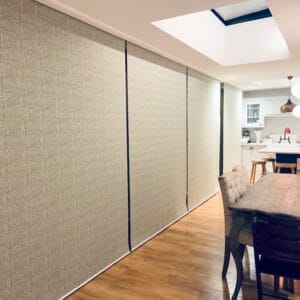
Roller blinds consist of one continuous panel of fabric that wraps around a discreet tube positioned above the window. They can be operated manually using a chain or cord, or motorised for added convenience.
When lowered, roller blinds sit flat against the window, creating a clean, uncluttered look that suits modern and contemporary interiors particularly well. Their simple design also makes them one of the most versatile blind styles available.
Key features include:
- A single, streamlined fabric panel
- Minimal bulk when fully raised
- Blackout, thermal and light-filtering fabric options
- Straightforward installation
- Low maintenance compared to slatted blinds
With fewer moving parts, roller blinds are reliable and long-lasting. They can be fitted inside or outside the window recess and are suitable for almost any window size or room.
Comparing Venetian, Vertical, and Roman Blinds
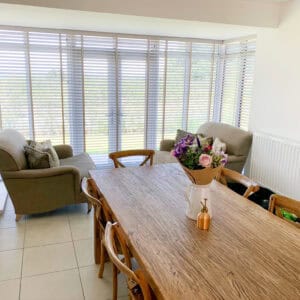
Venetian blinds use horizontal slats made from aluminium, wood or faux wood, which can be tilted to precisely control light and privacy. This adjustability makes them a practical choice for rooms where light levels change throughout the day.
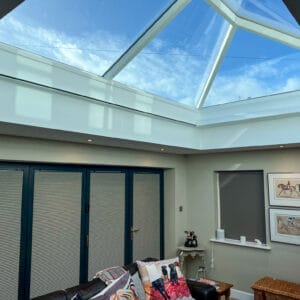
Vertical blinds feature individual fabric louvres suspended from a headrail, making them well suited to large windows, patio doors and wide openings. The louvres can be rotated or drawn to one side, offering flexible coverage and easy access.
Roman blinds create a softer, more decorative finish. As the blind is raised, the fabric folds into structured pleats, giving a tailored appearance that works particularly well in living rooms, dining rooms and more traditional spaces.
Blind Type | Mechanism | Best For | Aesthetic |
Roller | Rolls up | All window sizes | Minimalist |
Venetian | Tilting slats | Precise light control | Structured |
Vertical | Rotating louvres | Wide openings | Practical |
Roman | Folding pleats | Formal spaces | Elegant |
Venetian and vertical blinds typically require more cleaning due to the number of slats or louvres, while roller blinds are easier to maintain thanks to their flat surface. Roman blinds sit somewhere in between but are often priced higher due to their tailored construction.
Blinds Versus Curtains: Key Distinctions
Curtains are hung from poles or tracks and open from side to side, often extending beyond the window frame. While they add softness and character, they can take up more space and require more fabric than blinds.
Blinds are fitted within or just outside the window recess, allowing for a neater finish and greater control over natural light. Although curtains offer excellent insulation due to their weight, thermal roller blinds can provide comparable energy efficiency in a more streamlined form.
Key practical differences include:
- Light control: Blinds allow more precise adjustment
- Space: Curtains require additional wall space either side of the window
- Cleaning: Roller blinds are easy to wipe clean, while curtains often need laundering
- Installation: Blinds use discreet brackets; curtains require poles or tracks
Curtains are often favoured in period properties and traditional interiors, while roller blinds are ideal for kitchens, bathrooms and smaller rooms where space, moisture resistance and ease of cleaning are important. Many homeowners choose to combine both, using roller blinds for everyday privacy and light control, with curtains added for warmth and style.
Performance Factors: Privacy, Light, and Insulation
When choosing the right blinds, performance often matters just as much as appearance. How well blinds manage privacy, natural light and insulation can have a big impact on comfort, particularly in rooms that are used every day.
Different blind styles perform in different ways, so it’s important to match the solution to the room.
Privacy and Room Darkening
Roller blinds offer excellent privacy, particularly when fitted with blackout or dim-out fabrics. Their close fit to the window helps minimise gaps, preventing light bleed and reducing visibility from outside — something slatted blinds can struggle to achieve.
Blackout roller blinds are especially effective in bedrooms, nurseries and media rooms, where near-total darkness is often required. Roman blinds can also provide good coverage, although small amounts of light may filter through the folds. Venetian and vertical blinds allow privacy to be adjusted using the slats, but they rarely achieve full blackout.
The solid, single-panel design of roller blinds gives them a clear advantage when consistent privacy and room darkening are a priority.
Light Control Options and Flexibility
Venetian blinds are known for their flexibility, allowing light levels to be adjusted precisely by tilting the slats. This makes them useful in rooms where light changes throughout the day.
Roller blinds offer a simpler approach to light control through fabric choice. Sheer fabrics soften incoming light, dim-out fabrics reduce glare, and blackout fabrics block light almost completely. While they don’t offer fine adjustment, they provide a clear and effective solution for most households.
Roman blinds sit somewhere in between, raising and lowering in stages but without the ability to redirect light. Cellular blinds are another option, gently diffusing light while improving insulation.
Roller blinds are ideal for homeowners who prefer a straightforward solution — full light when open, effective shading when closed.
Energy Efficiency and Insulation Benefits
Roller blinds can contribute to improved insulation, particularly when fitted neatly inside the window recess to help reduce draughts. Thermal and reflective fabrics further enhance performance by limiting heat loss in winter and reducing solar gain during warmer months.
Roman blinds typically offer stronger insulation than standard roller blinds due to their thicker, layered fabrics, which can help regulate indoor temperatures. Cellular blinds provide the highest level of insulation thanks to their honeycomb structure, which traps air effectively.
Venetian and vertical blinds are less effective in this area, as gaps between slats allow heat to escape or enter more easily. Ultimately, insulation performance depends heavily on fabric choice, fit and installation — areas where professional measuring and fitting make a noticeable difference.
Suitability by Room and Modern Features
Different rooms place different demands on window blinds. Factors such as light control, privacy, moisture resistance and ease of use all play a role, and modern features like motorisation are changing how homeowners use blinds on a daily basis.
Choosing the right blind for each space ensures better comfort, practicality and long-term performance.
Bedroom, Living Room, and Kitchen Needs
Bedrooms benefit greatly from blackout roller blinds, which help block out daylight and create a calm sleeping environment. This makes them particularly popular for children’s bedrooms, nurseries and homes where shift work means sleeping during the day. Adding a thermal fabric also helps improve insulation during colder months.
In living rooms, the focus is often on balancing natural light with privacy. Light-filtering roller blinds allow daylight to enter while maintaining privacy, making them a practical everyday solution. For more traditional interiors, wood or faux wood Venetian blinds are also popular, offering precise control over light levels throughout the day.
Kitchens present more practical challenges due to heat, steam and splashes. Roller blinds made from PVC or coated fabrics perform especially well in these spaces, as they are moisture-resistant, durable and easy to wipe clean.
Bathrooms have similar requirements. Waterproof and mould-resistant roller blinds are ideal, particularly where space is limited and a close-fitting blind is needed to maintain privacy without cluttering the window area.
Smart Blinds and Motorised Options
Motorised blinds remove the need for cords or chains, offering smooth, effortless operation at the touch of a button. They’re ideal for large windows, hard-to-reach areas and modern homes looking for a clean, child-safe finish.
Control options include remote handsets, wall switches and smart home integration. Battery-powered systems are a popular retrofit option, while mains-powered motors are often chosen for new builds or larger installations.
Smart blinds can be integrated with systems such as Alexa, Google Home and Apple HomeKit, allowing for voice control, app-based operation and automated schedules. Some systems can even respond to changing light levels throughout the day.
Roller blinds are particularly well suited to motorisation due to their simple design. While motorised options do involve an additional cost, many homeowners see it as a worthwhile upgrade for added convenience and functionality.
Maintenance, Durability, and Cost Considerations
Different blind styles require different levels of care, and the materials used play a big role in how long they last and how easy they are to maintain. Roller blinds are generally lower maintenance than slatted blinds, but durability ultimately comes down to fabric quality, components and how well the blinds suit the room they’re installed in.
Cleaning and Upkeep
Roller blinds are one of the easiest window coverings to keep clean. Most can be wiped down quickly with a damp cloth, making them particularly well suited to kitchens, bathrooms and busy family homes. PVC and vinyl roller blinds are especially practical, as they’re resistant to moisture and everyday marks.
Venetian and vertical blinds typically require more upkeep, as each slat or louvre needs individual cleaning. While they offer good light control, they can be more time-consuming to maintain over the long term.
Fabric roller blinds may need the occasional vacuum to remove dust, and many modern fabrics feature stain-resistant finishes to help keep them looking fresh. Regular light cleaning helps extend the life of all blind types.
Longevity and Material Quality
Well-made roller blinds can provide many years of reliable use when manufactured from durable materials and fitted correctly. PVC and coated fabrics tend to resist warping, fading and moisture damage better than lighter, untreated fabrics.
Aluminium Venetian blinds are also known for their longevity, often lasting 10 to 15 years when properly maintained. Real wood blinds, while visually appealing, are more sensitive to humidity and are best suited to dry, well-ventilated rooms.
Faux wood blinds offer a practical alternative, combining the appearance of timber with improved resistance to moisture and temperature changes. Many roller blind fabrics also include UV protection to help prevent fading over time.
It’s also worth noting that longevity isn’t just about fabric. Our quality brackets, chains and operating mechanisms make a noticeable difference, with metal components typically outperforming cheaper plastic alternatives.
All of our blinds are made from the highest quality materials, bespoke, made to measure and made to last. With all of our blinds coming with a 10 year guarantee.
Budget and Value for Money
Roller blinds are often considered one of the most cost-effective window covering options, thanks to their straightforward design and efficient installation. Their simplicity makes them a practical choice for homeowners looking for a balance between affordability, performance and style.
Vertical blinds are commonly chosen for larger windows and patio doors, offering good coverage and flexibility for wide openings. Venetian blinds provide adjustable light control, while Roman blinds tend to sit at the more premium end of the market due to their tailored construction and fabric-heavy design.
Another advantage of roller blinds is ease of installation, which can help keep overall costs down. Optional upgrades such as blackout or thermal fabrics may increase the initial outlay slightly, but they can enhance comfort, improve energy efficiency and add long-term value to your home — making them a worthwhile investment for many homeowners.
Made to Measure Blinds to Suit Every Home and Budget
All of our blinds are made to measure, ensuring a perfect fit for your windows and a finish that looks clean, tailored and professional. By measuring and fitting every blind individually, we’re able to recommend the most suitable fabrics, systems and styles for each room.
We offer a wide range of options to suit different budgets, from practical everyday solutions to more premium finishes, without compromising on quality or service. Winchester Blinds & Shutters is well known for providing excellent value for money, with competitive pricing and honest advice to help you find the right blinds for your home.
Our aim is simple — to supply high-quality, made-to-measure blinds that look great, perform well and remain affordable.
Conclusion: Choosing the Right Blinds for Your Home
Choosing between roller blinds and other blind styles ultimately comes down to how you use each room and what you need from your window coverings. Roller blinds remain a popular choice for many homes thanks to their clean design, ease of use and wide range of fabric options, while Venetian, vertical and Roman blinds each offer distinct benefits for light control, privacy and style.
By considering factors such as room type, moisture levels, insulation, maintenance and budget, you can select blinds that not only look great but also perform well day to day. Professional measuring and fitting also play a key role in ensuring your blinds work as intended and stand the test of time.
If you’re based in Winchester or the surrounding Hampshire areas and would like expert advice on roller blinds or alternative window treatments, Winchester Blinds & Shutters is here to help. We offer a free home consultation, bringing samples and guidance directly to you to ensure the perfect fit for your home.
📞 Contact us today to book your free consultation and discover the right blinds for your space.
FAQs
Roller blinds use a single panel of fabric that rolls up and down, so light and privacy are controlled by how far the blind is lowered and the type of fabric chosen. With options such as light-filtering or blackout fabrics, they offer a simple and effective solution for managing privacy.
Venetian blinds use adjustable horizontal slats, allowing you to fine-tune light levels throughout the day while maintaining privacy. By tilting the slats, light can be directed up or down without fully opening the blind. This makes Venetian blinds particularly well suited to living areas, while blackout roller blinds are often preferred in bedrooms where full light exclusion is needed.
Roller blinds are one of the simplest blind types to install, using a straightforward bracket system. This makes them quick to fit and easy to adjust, especially when professionally measured and installed.
Roman blinds are more complex due to their folding fabric design and additional hardware. Accurate measuring is essential, and installation generally takes longer.
In terms of maintenance, roller blinds are low effort and usually only require occasional dusting or wiping. Roman blinds need more attention, as dust can settle within the folds and the operating cords and rings should be checked periodically. Some Roman blind fabrics may also require professional cleaning to maintain their appearance.
Roller blinds offer a clean, streamlined look that suits modern interiors, whereas vertical blinds can feel more traditional in domestic settings. The flat fabric of a roller blind creates a neater finish with minimal visual distraction.
While vertical blinds work well for large windows and patio doors, the individual louvres can be prone to wear and damage, particularly in homes with children or pets. Roller blinds eliminate this issue by using a single fabric panel, making them quieter, more robust and easier to maintain.
Their compact design also avoids the bulky headrails often associated with vertical blinds.
Roller blinds fitted with thermal or reflective backing can significantly reduce heat transfer through windows. When fitted neatly within the recess, they help minimise draughts and improve overall energy efficiency.
In warmer months, blackout and reflective roller blinds reduce solar gain, helping keep rooms cooler. During colder weather, thermal fabrics help retain heat indoors. While cellular blinds are known for insulation, thermal roller blinds can offer comparable benefits in a more cost-effective and versatile format.
Curtains can also provide insulation, but they often leave gaps around the edges, which reduces their effectiveness.
Roller blinds offer a wide choice of fabrics, colours, textures and patterns, making them easy to tailor to different interior styles. Options range from sheer and light-filtering fabrics to full blackout designs.
Cellular shades tend to focus on neutral colours and uniform finishes, with their honeycomb structure being the main design feature. While practical, they offer fewer customisation options.
Roller blinds can also be customised with printed designs, artwork or branding, providing far greater flexibility in appearance than cellular shades.
Roller blinds are designed to remain taut and supported by their roller mechanism, helping them retain their shape over time. Curtains, by contrast, can stretch, sag or lose their structure, particularly in humid environments or after repeated washing.
Many roller blind fabrics are treated with UV protection to reduce fading and fabric breakdown caused by sunlight. Curtains, especially those made from natural fibres, are more susceptible to fading and wear.
With quality components, roller blind mechanisms can last for many years with minimal maintenance. Curtains often require more frequent cleaning and replacement of tracks or fixings, which can reduce their overall lifespan.
We supply many Blinds, Shutters and Awnings to customers all over Hampshire and the home counties including towns and villages such as Alresford, Stockbridge, Romsey, Eastleigh and Southampton.
We offer a fully comprehensive package for homes throughout Hampshire, Dorset, Surrey, Sussex, Kent and London.
Contact us here for a free no obligation quotation.
Discover all about our awnings and canopies by visiting our sister site winchesterawnings.com