Skip to content

The best blinds for extensions and new builds depend on your glazing, the way you use each room and the finish you want to achieve. Motorised roller blinds can suit large windows and sliding doors, pleated blinds can work neatly with compatible bifold doors, and specialist roof lantern blinds provide shading overhead. If you want concealed blinds, plan them before the surrounding ceilings and walls are finished.
An extension or new home gives you the opportunity to create a space that works exactly as you want it to. Large windows bring in daylight, glass doors open up garden views, and roof lanterns brighten the heart of the home.
But those same features need careful thought when it comes to shade and privacy.
Where will the afternoon sun fall? Will you be overlooked when the lights are on? How will you reach a blind above the dining table? And where will the blinds sit when you want the glazing completely clear?
At Winchester Blinds & Shutters, we help homeowners plan made-to-measure blinds for extensions, renovations and new builds across Hampshire and surrounding counties. Here is what to consider before choosing yours.
When Should You Plan Blinds for an Extension or New Build?
Discuss your blinds while the glazing and building details are being planned, especially if you want concealed fittings or mains-powered motorisation. Early advice helps you allow for the blind housing, fixing positions, door clearances and any electrical requirements.
You do not need to have every fabric and colour decided before speaking to a blind specialist. Drawings, proposed window sizes and an idea of how you will use the room are a useful starting point.
For conventional blinds, final measuring will usually depend on the finished openings and fitting surfaces. Concealed systems need an earlier conversation because their housing becomes part of the building.
Before plastering and decorating, it helps to agree:
Where the blinds will be fitted and how much space they need.
Whether any blind housings will be concealed.
How the blinds will clear handles and opening doors.
Which blinds will be manual or motorised.
What power supply and access the selected system requires.
This is particularly useful in kitchen extensions, where glazing, cabinetry, lighting and ceiling details all need to work together.
Which Blinds Suit Different Types of Glazing?
One extension can need several different shading solutions. The best result comes from matching the blind to each opening rather than choosing one type for every window.
| Glazing or room feature | Options worth considering | Main planning point |
|---|---|---|
| Large sliding doors | Motorised roller blinds, with visible or concealed housings | Blind widths, access through the doors and space above the glazing |
| Bifold doors | Suitable pleated door blinds or roller blinds fitted above the opening | Frame compatibility, handles and clearance when the doors fold |
| Roof lanterns and rooflights | Specialist pleated, cellular or zip roller systems | Dimensions, support, fitting position and access for operation |
| Smaller extension windows | Roller, Roman or pleated blinds | Privacy, available recess and coordination with the larger windows |
| New-build bedrooms | Blinds with blackout fabrics or specialist light-excluding systems | Light entering around the edges as well as through the fabric |
Suitability depends on the actual glazing and blind specification. Checking these details before ordering helps avoid a blind that looks right on paper but gets in the way in everyday use.
Concealed Blinds for Extensions: How Blindspace Works
If you want the windows to remain the main feature of your extension, concealed blinds are worth considering.
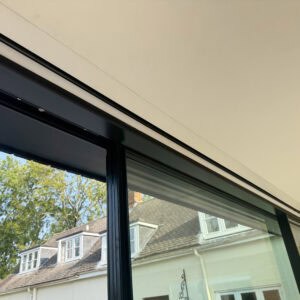
Blindspace is a concealment system rather than a type of blind fabric. It provides a housing within the surrounding ceiling or wall, allowing a compatible blind to retract into the building detail when raised.
With a suitable roller blind installation, this keeps the roll and mechanism out of view while leaving shading available whenever you need it.
The approach can work particularly well with large glazed doors and contemporary extensions where a minimal finish is part of the design.
The housing and blind must be specified together. Window dimensions, fabric, motor choice and available space all affect the requirements, so it is important to coordinate the detail before the surrounding finishes are completed.
Explore our Blindspace concealed blinds page for more about the system and how we help plan an installation.
A Real Extension Project in Chilcomb, Winchester
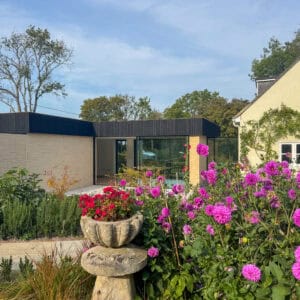
For an extension to a traditional country cottage in Chilcomb, our customer wanted a contemporary glazed living space with views of the garden on both sides.
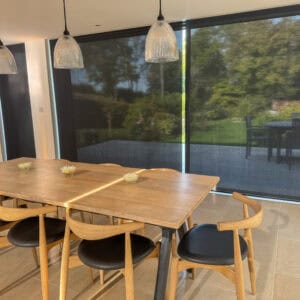
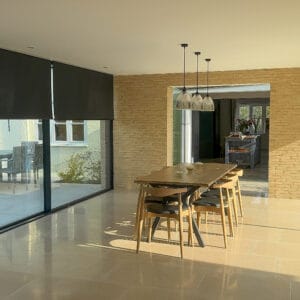
We worked with the homeowner and builder to coordinate Blindspace boxes for motorised roller blinds across the large glass doors. The black blind fabric complemented the black frames and natural brickwork, while the concealed housings preserved the open appearance when the blinds were raised.
Smaller seating-area windows had matching manual roller blinds, showing how different operating systems can work together within one room.
See the photographs and finished installation in our Chilcomb Blindspace extension case study.
Concealed Blindspace Blinds for a Bishop’s Waltham Kitchen Extension
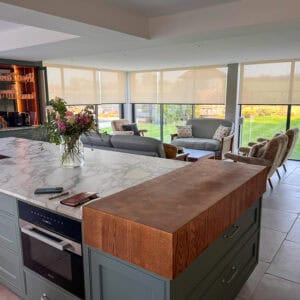
For a kitchen extension in Bishop’s Waltham, we fitted motorised roller blinds within concealed Blindspace boxes, combining convenient shade and privacy with a clean architectural finish. The project demonstrates why concealed blinds are worth considering during construction, while there is still time to coordinate the housings with the building work. Explore our Bishop’s Waltham Blindspace case study to see the finished installation.
Blinds for Bifold and Sliding Doors
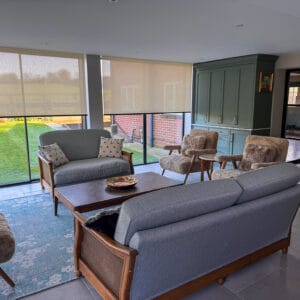
Bifold and sliding doors need blinds that work around the way you enter, leave and open up the room.
A neat appearance matters, but so does being able to use the main access door without raising every blind.
Roller Blinds for Large Glazed Openings
Roller blinds offer a simple finish and a wide choice of fabrics. Depending on the dimensions and system, a large opening may be divided between several blinds.
That can allow you to shade one part of the room while leaving another open, or raise the blind beside the access door independently.
Planning the divisions around the glazing can also help the installation look more balanced. A single blind spanning an entire opening is not always practical or available.
Pleated Blinds for Compatible Bifold Doors
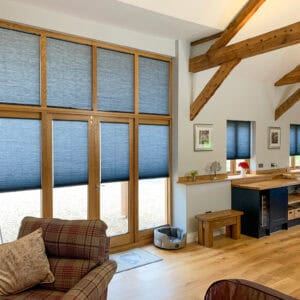
Suitable pleated blinds can fit closely to individual door panes, providing shading that moves with the doors.
Compatibility needs to be checked carefully. The frame, glazing beads, handles and clearance between folded doors all influence which system will work.
Our bifold door blinds page explains the options we supply and fit.
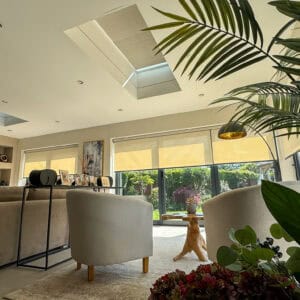
Roof Lantern Blinds for Kitchen and Living Extensions
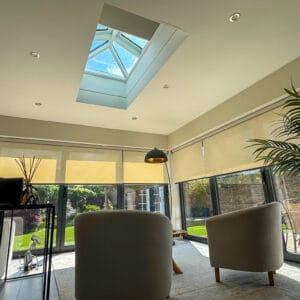
Roof lanterns introduce light from above, so they need a different approach from vertical windows.
Even with the door blinds lowered, overhead sunlight can still create glare over a dining table, kitchen island or television.
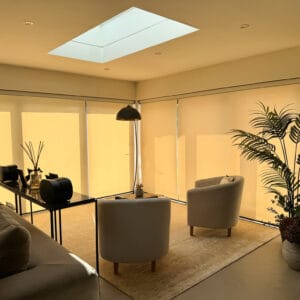
Specialist roof lantern systems include suitable pleated, cellular and zip roller blinds. The right choice depends on the opening, the desired appearance and how much light you want to filter or exclude.
Cellular fabrics have a honeycomb structure that traps air and can help improve insulation at the glazing. The overall effect depends on the fabric, system, fit and existing glazing.
Motorisation can make overhead blinds much easier to operate, particularly where the roof lantern is high or positioned above furniture.
Explore our made-to-measure roof lantern blinds for advice on suitable systems for your extension.
Choosing Fabrics for Daylight, Privacy and Blackout
The blind system determines how the blind fits and operates; the fabric determines much of its light control and privacy. Looking at samples in the room helps you understand how a material will work with your glazing and interior.
Screen Fabrics for Glare and Outward Visibility
Suitable screen fabrics can soften bright sunlight while retaining some view outside.
They can be useful in glazed living spaces where you want shade without immediately losing the garden outlook. The result varies with the fabric’s openness, colour and lighting conditions.
Screen fabrics should not be relied on for privacy after dark. When the room is brighter than outside, visibility through the fabric can change.
Light-Filtering Fabrics for Softer Daylight
Light-filtering fabrics diffuse daylight and can make a bright room feel gentler.
They are worth considering for kitchens, dining areas and living rooms where you want to reduce harsh light without using blackout fabric.
Privacy varies between materials, so tell us whether the room is overlooked and how you use it in the evening.
Blackout Fabrics for Bedrooms and Media Rooms
Blackout fabric blocks light passing through the material itself. However, light may still enter around the sides, top or bottom of the blind.
If a darker room is a priority, the complete installation needs to be considered, including any suitable channels or additional light-excluding details.
Our blackout blinds page is a useful starting point for bedrooms and rooms where greater light exclusion matters.
Are Motorised Blinds Worth Considering?
Motorised blinds are particularly useful for large glazing, several blinds in one room and windows that are difficult to reach. They make it easier to adjust the shading as sunlight and privacy needs change throughout the day.
Depending on the chosen system, blinds can be controlled individually or in groups. Compatible systems may also offer app control, schedules or smart-home integration.
For an extension with glazing on more than one side, separate control can be especially helpful. You may want to shade the sunny side while keeping the other side open.
Plan the Power Supply Before the Finishes
Mains-powered blinds need the correct electrical provision in the agreed position. Battery-powered options may be suitable for some installations, but charging or battery access still needs to be considered.
The right choice depends on the blind size, motor, frequency of use and installation.
We supply motorised and electric blinds across suitable ranges. You can also read our guide to Somfy electric blinds for more about control options.
Choosing Blinds Throughout a New-Build Home
A new-build home gives you the chance to plan each room individually while keeping a coordinated appearance.
A glazed kitchen may need glare control and easy access to the garden. A bedroom may need greater light exclusion. A front-facing living room may need privacy during the day without feeling closed in.
Colours and textures can connect those rooms even when the blind types differ.
It is also sensible to prioritise. Bedroom privacy and exposed ground-floor windows may need attention first, while concealed housings and electrical provision should be discussed early enough to fit into the building programme.
Made-to-measure blinds can then be specified around the finished openings, with the fitting schedule agreed alongside the progress of the home.
Motorised Blinds and Roof Lantern Shading for a New Home in Hook
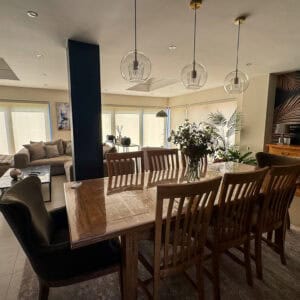
In a new-build home in Hook, we combined Somfy motorised roller blinds across the bifold doors with motorised pleated blinds for two roof lanterns. Independently controlled door blinds allowed convenient garden access, while the overhead blinds helped manage sunlight and glare in the open-plan living space. See our Hook new-build blinds case study for an example of planning complementary shading for vertical and roof glazing.
How Much Do Blinds for an Extension Cost?
The cost depends on the number and size of the openings, blind type, fabric, operating system and installation requirements.
Concealed blinds also involve housing and coordination with the building work. Roof lanterns and unusually large glazing can require specialist systems.
For a useful quotation, share your drawings or photographs, approximate dimensions and the result you want to achieve. It also helps to identify where motorisation is essential and where manual operation would work well.
You can combine different options within the same project. Our Chilcomb installation, for example, used motorised blinds for the large doors and manual blinds for smaller windows.
We will explain suitable choices and provide a no-obligation quotation for the agreed specification.
Five Details to Check Before Ordering
The most useful final checks are often the practical ones:
Door access: can you use the main opening without moving every blind?
Evening privacy: will your chosen fabric provide the privacy you need with the lights on?
Fitting space: is there enough room for the blind, brackets or concealed housing?
Power and access: are the electrical requirements and future maintenance access agreed?
Overhead sunlight: does the roof glazing need its own shading?
Considering these together helps create a room that is comfortable to use as well as attractive to look at.
Blinds for Extensions and New Builds Across Hampshire and Beyond
Winchester Blinds & Shutters is an independent family business based in Alresford, with more than 30 years of industry experience.
We supply and fit made-to-measure blinds for homes across Winchester, Alresford and Hampshire, as well as projects in surrounding counties.
Whether you are planning a glass extension, renovating a traditional property or choosing blinds for a new home, we can help you assess the glazing, compare fabrics and agree a practical installation.
Have drawings or a building project underway? Speak to us before the ceilings and walls are finished, especially if you are considering concealed blinds.
Contact us to discuss your project and arrange a free, no-obligation quotation, or call 01962 736836.