Skip to content

Window treatments do far more than cover a window. They influence how a room feels, how much light you live with day to day, and even how energy-efficient your home is.
If you’re deciding between shutters and blinds, you’re not alone. It’s one of the most common questions homeowners ask — and the answer isn’t always straightforward.
At a glance, shutters are often viewed as a long-term investment, offering a built-in finish with strong insulation and durability. Blinds, by contrast, are more flexible and affordable, with a wider choice of styles and materials.
The real difference becomes clearer when you look at how they perform in everyday life.
After over 30 years of supplying and installing blinds and shutters across Hampshire, we’ve seen how the right window covering can completely transform a home — not just visually, but in terms of privacy, comfort, and how a room is used day-to-day.
Both shutters and blinds are excellent options. The key is understanding which works best for your specific windows, lifestyle, and long-term plans.
Key Takeaways
- Shutters are a premium, long-term investment offering durability, insulation, and added property value
- Blinds are a flexible and cost-effective solution available in a wide range of styles
- The right choice depends on your budget, window type, privacy needs, and how you use the space
Core Differences Between Shutters and Blinds
Although shutters and blinds serve the same purpose, they are fundamentally different in how they’re built and used.
Shutters are fitted directly into the window frame, creating a solid, permanent structure. Their adjustable louvres allow you to control light and privacy without moving the panels themselves. This gives them a more architectural feel — almost like part of the window rather than something added to it.
Blinds work in a more mechanical way. Whether it’s a roller, Venetian, or vertical design, they rely on cords, chains, or motorised systems to raise, lower, or tilt the material. This gives you flexibility, but it also means more moving parts and, over time, more wear.
In practice, this difference affects how each option feels to live with. Shutters tend to be more stable and predictable, while blinds offer convenience but can require more maintenance as they age.
Materials, Styles, and Design Flexibility
One of the biggest advantages of blinds is variety. From soft fabric Roman blinds to sleek aluminium Venetians, they can be tailored to almost any interior style. This makes them especially appealing if you like to update your décor or match specific colours and textures.
Shutters take a more consistent approach. Typically made from wood, engineered wood, or PVC, they offer a clean, structured look that works across both modern and traditional homes. Rather than changing with trends, they provide a timeless finish that stays relevant for years.
Material choice also affects practicality. PVC shutters, for example, are highly resistant to moisture, making them ideal for kitchens and bathrooms. Fabric blinds, while visually softer, may require more care to prevent fading or staining over time.
Light Control and Privacy in Everyday Use
Both shutters and blinds offer effective control over light and privacy, but they do so in different ways.
Shutters allow for more precise adjustments. By tilting the louvres, you can let natural light in while still limiting visibility from outside. This makes them particularly useful in living spaces or street-facing rooms where you want both brightness and privacy at the same time.
Blinds tend to offer either filtered light or full coverage, depending on the style. Venetian and vertical blinds allow some adjustment through tilting slats, but roller and Roman blinds operate more simply — they are either raised or lowered.
Another subtle difference is consistency. Shutters stay firmly in position once adjusted, whereas blinds can shift slightly with airflow or movement, which may affect privacy in certain conditions.
Blackout and Sleep Quality
If complete darkness is your priority, blinds — particularly blackout roller blinds — have a clear advantage. Their design allows them to block out almost all incoming light, making them a popular choice for bedrooms.
Shutters, while effective at reducing light, don’t typically achieve full blackout. Small gaps around the frame and between louvres can allow thin lines of light through. For many homeowners, this isn’t an issue, but it’s worth considering if you’re sensitive to light when sleeping.
Durability and Long-Term Maintenance
Durability is one of the areas where shutters stand out most clearly.
A well-made set of shutters can last 20 to 30 years or more with minimal upkeep. Their solid construction and lack of complex mechanisms mean they’re less prone to wear and tear. Cleaning is straightforward — usually just a quick wipe with a cloth.
Blinds, on the other hand, tend to have a shorter lifespan. Depending on the material and usage, they often need replacing within 5 to 10 years. Fabric can fade, slats can bend, and operating mechanisms can wear out over time.
Maintenance is also more involved. Venetian blinds collect dust across multiple slats, while fabric blinds may need regular vacuuming or occasional professional cleaning.
A Real Homeowner Experience
A Lesson from a Bay Window Installation
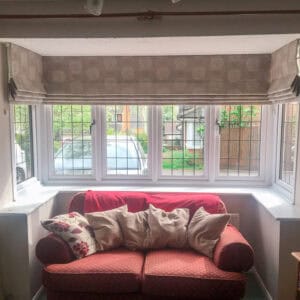
Around 20 years ago, we fitted Roman blinds for a customer’s living room bay window in Winchester. Although, we advised the customer of alternative options, our customer was set on Roman blinds. At the time, they were the perfect choice for them:
- Soft, warm fabric
- Added a cosy feel to the room
- Complemented the interior beautifully
However, there was one key issue.
The property was on a busy residential street, and when the blinds were raised:
The room became completely overlooked.
Even when partially lowered, they didn’t offer the balance of light and privacy the customer needed.
In hindsight, the customer later told us:
“They wished they had chosen shutters instead”.
Bay window shutters would have allowed:
- Natural light to still flood the room
- Privacy at eye level
- A more practical everyday solution
A More Suitable Solution in Basingstoke

More recently, we worked with a homeowner in Basingstoke with a very similar setup:
- Bay window
- Street-facing property
- High foot traffic outside
This time, we installed tier on tier shutters to their bay window
The result:
- Light was still maximised throughout the day
- Privacy was maintained without closing off the room
- The space felt brighter, more open, and more usable
Energy Efficiency and Comfort
Do shutters help reduce heat loss?
Yes, shutters improve insulation by creating a barrier at the window, helping retain heat in winter and keep rooms cooler in summer.
Shutters also offer a practical advantage when it comes to insulation.
Because they are fitted tightly within the window frame, they create an additional barrier that helps reduce heat loss in winter and limit heat gain in summer. This can make rooms feel more comfortable year-round and may contribute to improved energy efficiency.
Blinds generally provide less insulation, particularly fabric styles. While some designs, such as cellular blinds, are made to improve thermal performance, they still don’t match the solid structure of shutters.
Style, Longevity, and Property Value
Do shutters last longer than blinds?
Shutters typically last 20–30 years, while blinds usually need replacing after 5–10 years.
From a design perspective, shutters are often seen as a more permanent upgrade. Their clean lines and neutral appearance make them adaptable to a wide range of interiors, from period properties to contemporary homes.
They are also frequently associated with added property value. Because they are fitted and considered part of the home, they can make a space more appealing to potential buyers.
Blinds, by contrast, are better suited to shorter-term flexibility. They allow for easy updates and can be swapped out as styles change, but they are generally viewed as a temporary furnishing rather than a long-term feature.
Cost vs Value Over Time
Are shutters or blinds cheaper?
Blinds are cheaper upfront, but shutters are more cost-effective long term because they last 20–30 years compared to 5–10 years for blinds.
Cost is often the deciding factor.
Blinds are more affordable upfront, making them accessible for most budgets. Shutters require a higher initial investment, particularly for made-to-measure designs.
However, when you consider lifespan and replacement costs, the difference becomes less clear. Blinds may need to be replaced multiple times over the years, while shutters are typically a one-time purchase that lasts decades.
For homeowners planning to stay in their property, shutters often represent better long-term value.
Common Mistakes to Avoid
Choosing Style Over Practicality
As seen in the Roman blind example:
- They looked great
- But didn’t solve the privacy issue
👉 Always consider how the room is used day-to-day
Not Considering Privacy Properly
Street-facing homes in areas like:
Often need solutions that:
- Allow light in
- But block visibility from outside
👉 This is where shutters often outperform blinds
Underestimating Long-Term Value
Blinds may seem cheaper initially, but:
- Replacements every 5–10 years add up
- Maintenance is higher
👉 Shutters are often more cost-effective over time
Not Accounting for Sun Exposure
South-facing rooms need:
- Heat control
- Glare reduction
👉 Choosing the wrong solution can make a room uncomfortable
Quick Comparison: Shutters vs Blinds
Feature | Shutters | Blinds |
Cost | Higher upfront | Lower upfront |
Lifespan | 20–30 years | 5–10 years |
Insulation | Excellent | Moderate |
Maintenance | Low | Moderate |
Style | Timeless | Versatile |
Property Value | Adds value | Neutral |
Making the Right Choice
Ultimately, the decision comes down to how you use your home and what matters most to you.
If you’re looking for a long-lasting, low-maintenance solution that enhances both comfort and appearance, shutters are a strong choice. If flexibility, lower upfront cost, and design variety are your priorities, blinds may be the better fit.
Both options have their place — the key is choosing the one that aligns with your lifestyle rather than just your budget.
Choose Shutters If You:
- Want a long-term investment
- Need better privacy control
- Have a bay window or period features
- Want a premium, built-in finish
Choose Blinds If You:
- Are working to a tighter budget
- Want more design flexibility
- Prefer a quicker installation
- Like to update interiors regularly
Final Thoughts
Shutters and blinds each offer distinct advantages, but they serve slightly different needs.
Blinds are ideal for quick updates and budget-conscious projects. Shutters, on the other hand, are better suited to homeowners who want a more permanent, high-quality finish that adds value over time.
By understanding how each performs beyond the showroom — in real homes, over real years — you’ll be in a much better position to make the right decision.
About Winchester Blinds & Shutters
At Winchester Blinds & Shutters, we’ve been helping homeowners across Hampshire from Winchester, Alresford, Stockbridge to Romsey and beyond choose the right window coverings for over 30 years.
We specialise in bespoke, made-to-measure solutions, offering expert advice tailored to your home, your windows, and how you use your space. Whether you’re considering shutters or exploring alternatives, we supply and install a wide range of blinds including:
- Bifold door blinds
- Roof lantern blinds
- Conservatory blinds
- Orangery blinds
- Garden room blinds
- Motorised and smart-controlled systems
Our approach is simple — we don’t push one product over another. Instead, we help you understand what will work best long-term, based on your priorities for privacy, light control, insulation, and style.
If you’re also looking to enhance your outdoor space, our sister company Winchester Awnings provides high-quality, made-to-measure awnings and external shading solutions, perfect for gardens, patios, and commercial spaces.
👉 With decades of hands-on experience, we’re here to help you make the right choice with confidence.
📞 Book a Free Survey
If you’re deciding between shutters and blinds, we’re here to help.
We offer:
- Free home surveys
- Honest, expert advice
- Bespoke, made-to-measure solutions
👉 Get in touch today to find the right solution for your home.